The Commission on Retirement Security and Personal Savings issued their report this month: Securing Our Financial Future:Report of the Commission on Retirement Security and Personal Savings.
Our discussion. Breaking News: Annuities are the Best!
Wednesday, June 22, 2016

Monday, June 20, 2016
Bad Pols or Bad Polls?
Even as party Democrats work in unison to combat Republican efforts to limit voter turnout that tends to favor Democrats at the polls (voter ID, early voting, absentee ballots, shutting down polling places in Democratic strongholds), under the radar accusations are being leveled at the Clinton campaign (actually unnamed alleged bad actors) of election fraud in the Democratic primaries and caucuses this year. In a paper (not a study - no peer review) that has been rushed to the public due to the importance of timeliness over academic rigor in an election year, two statisticians assert that electoral fraud favoring Clinton has definitely occurred based on the magnitude of the difference between the preliminary exit poll results and the actual vote tallies in states using voting machines with a paper trail vs. those states without the paper trail.
One obvious flaw in this approach is that they do not consider all of the possible relevant differences between those two groupings of states. The authors point to the internet being "littered" with allegations of electoral fraud as support for their findings as if there is something statistically significant about that - the "where there is smoke, there is fire" argument.
Ironically, it was mainly the states under the greatest Republican control in the early 2000's that started adopting the use of touchscreen machines without the audit trail.
At the moment, the mainstream press is avoiding this topic, though a The Nation article debunking the case for electoral fraud followed an earlier article and some debate on the subject.
For now, the Bernie supporters are running with this one, but we can expect the Trump campaign to pick this up and make their "crooked" Hillary allegations later this year if Bernie supporters and the candidate himself fall in line behind Clinton at the convention. Maybe the authors of the paper can subject their paper to critical peer review in the meantime while they continue their search for alternative explanations of the data. At the moment responsible academics do not appear to be taking this paper seriously, but the conclusion is too juicy for this not to nose its way into the mainstream media in the next few weeks. Bernie Sanders is the one person who could nip it in the bud, but he is trying to hold on to as much power as he can at least through the convention, so he is likely to remain quiet until then.
| Source: nymag.com |
Ironically, it was mainly the states under the greatest Republican control in the early 2000's that started adopting the use of touchscreen machines without the audit trail.
At the moment, the mainstream press is avoiding this topic, though a The Nation article debunking the case for electoral fraud followed an earlier article and some debate on the subject.
For now, the Bernie supporters are running with this one, but we can expect the Trump campaign to pick this up and make their "crooked" Hillary allegations later this year if Bernie supporters and the candidate himself fall in line behind Clinton at the convention. Maybe the authors of the paper can subject their paper to critical peer review in the meantime while they continue their search for alternative explanations of the data. At the moment responsible academics do not appear to be taking this paper seriously, but the conclusion is too juicy for this not to nose its way into the mainstream media in the next few weeks. Bernie Sanders is the one person who could nip it in the bud, but he is trying to hold on to as much power as he can at least through the convention, so he is likely to remain quiet until then.
| Source: Huffingtonpost |
Wednesday, June 15, 2016
Four Party System
Our March 24, 2016 Post - Down the Road muses on the possibility of a 4-party system evolving in the U.S. as a possible path to avoid persistent deterioration of government function. Lo and behold, Bloomberg News and Jeffrey Sachs have similar thoughts: This Campaign Broke the System. Of course, on this blog, we do not see the Trump campaign as an aberration that broke the system, but as a not unlikely outcome of the sliding quality of Republican presidential campaigns over recent decades.
They Should Have Known Better
Elizabeth Holmes had a dream that a small drop of blood could replace test tube(s) worth of blood used to run a range of blood tests. She dropped out of Stanford to pursue that dream, the story goes, to help others like her with a deathly fear of drawing blood.
The problem was that a dream is not the same as a reality and there never was real evidence that the technology existed, only evidence that the dream existed.
As has been well documented, she was able to find backers and prominent leaders to join her board, mostly older men either outside the health care field or not currently practicing.
They should have known better.
That includes Walgreens - too anxious to close the deal. FOMO!
Google and others knew better than to invest. In interviews with Holmes, the Google folks were never presented the evidence they needed to believe that the technology would work.
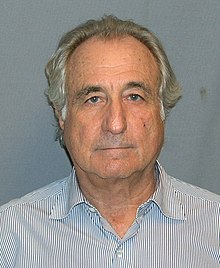
Reminds us a little of this man.
Some individuals and organizations knew better about Madoff all along. The high investment returns year after year could not be legitimate in the real world. That is not scientific proof, but by inference it was clear that the only way such returns were possible was in a Ponzi scheme or front running. It turned out to be a Ponzi scheme. Many organizations steered their clients away from Madoff. Other advisors said they did not know how he achieved those returns. No legitimate investment advisor could actively recommend Madoff because no legitimate investment advisor had any idea what Madoff was doing that could be legitimate.
In order to avoid dangerous situations, we do not need proof. We only need enough information to convince ourselves by inference that something is not right. To be convinced by claims of a breakthrough technology, we need substance - evidence, not happy talk and a black turtleneck, even with the confident speech with the appropriate hand gestures and head tilt.
More than anything else, this blog is about making inferences from a limited set of data on the statements and actions of individuals and groups, especially, but not exclusively in the political arena. We then observe whether the political commentators appropriately consider these arguments or whether they instead are sidetracked by the claims made by the political actors. We find the objective press custom of addressing statements or actions of one side of the aisle by asking the other side of the aisle what they think to be an inadequate response to events. We also find the objective press practice of reporting on the actions of one side of the aisle based on statements by that side (the first half of the "he said/she said" reporting process) almost at face value instead of directly reporting what those actions represent to be inadequate and therefore inaccurate reporting. The voter suppression efforts of Republicans throughout the country are an example of this.
| Source: Forbes.com |
As has been well documented, she was able to find backers and prominent leaders to join her board, mostly older men either outside the health care field or not currently practicing.
They should have known better.
That includes Walgreens - too anxious to close the deal. FOMO!
Google and others knew better than to invest. In interviews with Holmes, the Google folks were never presented the evidence they needed to believe that the technology would work.
Reminds us a little of this man.
 |
| Source: Wikipedia |
In order to avoid dangerous situations, we do not need proof. We only need enough information to convince ourselves by inference that something is not right. To be convinced by claims of a breakthrough technology, we need substance - evidence, not happy talk and a black turtleneck, even with the confident speech with the appropriate hand gestures and head tilt.
More than anything else, this blog is about making inferences from a limited set of data on the statements and actions of individuals and groups, especially, but not exclusively in the political arena. We then observe whether the political commentators appropriately consider these arguments or whether they instead are sidetracked by the claims made by the political actors. We find the objective press custom of addressing statements or actions of one side of the aisle by asking the other side of the aisle what they think to be an inadequate response to events. We also find the objective press practice of reporting on the actions of one side of the aisle based on statements by that side (the first half of the "he said/she said" reporting process) almost at face value instead of directly reporting what those actions represent to be inadequate and therefore inaccurate reporting. The voter suppression efforts of Republicans throughout the country are an example of this.
Voter ID Laws - Framing the Issue
In their May 3, 2016 post on their blog, Joseph and Mark (last names not included in the bio on their site) criticize the failure of a NY Times article on voter ID laws to promptly address the absence of voter impersonation fraud until nearly the end of the piece, while introducing the voter ID law subject at the beginning in the usual "he said/she said - two sides to every issue" manner still considered the standard for objective reporting outside the cable news sphere of Foxnews/MSNBC.
To borrow from Mann and Ornstein, it's even worse than that.
First of all, any objective piece about voter ID laws -- "voter ID" - what could be more reasonable? -- any piece, to be objective, should refer to 'voter impersonation fraud" rather than the vague and more general terms "voter fraud" and "election fraud" which encompass other practices voter ID does not address. Election fraud history includes many examples of practices that voter ID does not address, like buying votes, counting nonexistent ballots as valid, not counting votes that ought to be counted, and, in fact, denying the right to vote to people who are entitled to vote, which is actually a practice that voter ID promotes by permitting peremptory challenges to eligible individuals who show up to vote. The main deterrent to voter impersonation fraud, in the absence of these new laws, is that an individual who is not a qualified voter would risk being prosecuted and convicted of a felony when the only upside to that individual would be to increase the vote tally of their favored candidate(s) by one vote.
Even more to the point, voter ID laws emerged as one of a series of measures to suppress voter registration and voter turnout and the ability of qualified citizens to vote as a distinctly Republican Party practice.
In 2002, NH state Republican Party operatives hired an outside telemarketer to jam the phone lines of a get out the vote effort of the state Democratic Party and the firefighters union. (2002 New Hampshire Senate election phone jamming scandal.)
Only weeks after the 2006 midterm elections, in an unprecedented step, seven of the U.S. Attorneys, all Republicans, were fired by the Bush administration's Department of Justice. The reasons for the firings included the failure to prosecute allegations of voter election fraud that would "hamper Democratic voter registration." (2006 US Attorneys Dismissals Controversy) Although it had become customary for US Attorneys to submit their resignations at the end of a Presidential administration, this kind of firing of attorneys of the same party after the midterm elections had all of the appearances of political motivation. The Bush administration figures may have believed the firings would escape notice, but political followers began to notice immediately. The line of argument from the Bush administration supporters became - "this happens all the time - when Clinton became President all of the US Attorneys were replaced", deftly avoiding altogether the actual substance of the argument that politics was intruding dangerously into the administration of justice.
If you are a party trying to keep power in a democracy, but are concerned that demographic changes and the tide of popular opinion are turning away from you, then-
Eliminate practices that make it easier for broad swaths of the public to vote, such as early voting, absentee ballots, college student registration in university towns, and get out the vote drives.
Put in place practices that make registration and voting more difficult for those more likely to vote for Democrates - enacting voter ID laws and shutting down polling places in Democratic strongholds.
Monday, June 13, 2016
Framing to Win vs. Framing for Understanding
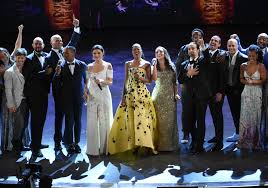
"Hamilton continues Broadway dominance with 11 Tonys" read today's headline in the Washington Post, along with the subheading "The blockbuster musical about the Founding Fathers fell short of the record for most Tony Awards held by "The Producers".
(Source: USAToday)
OK, so it is an awards show and therefore a competition among this year's nominees, which never feels quite right in the creative arts as opposed to athletic competition. Still, in this 2015-2016 Broadway season , best described as the blowout year of Hamilton, for the headline to say that Hamilton in any way"falls short" seems like a failure of framing. Even "second only to The Producers all-time" would have been more accurate, but still not quite faithfully represent the completely positive night and year for Hamilton.
So why does that matter? Seems like a small quibble, but it illustrates the problem of framing in the news media - the gravitation toward the horse race in the elections as well as the most tantalizing tidbit, which can mean setting records or not, or a candidate making the most outrageous statements with not enough treatment of the issue "What is really going on here?" More to come on this framing topic in the next post.
Subscribe to:
Posts (Atom)