Monday, June 20, 2016

Bad Pols or Bad Polls?

Even as party Democrats work in unison to combat Republican efforts to limit voter turnout that tends to favor Democrats at the polls (voter ID, early voting, absentee ballots, shutting down polling places in Democratic strongholds), under the radar accusations are being leveled at the Clinton campaign (actually unnamed alleged bad actors) of election fraud in the Democratic primaries and caucuses this year. In a paper (not a study - no peer review) that has been rushed to the public due to the importance of timeliness  over academic rigor in an election year, two statisticians assert that electoral fraud favoring Clinton has definitely occurred based on the magnitude of the difference between the preliminary exit poll results and the actual vote tallies in states using voting machines with a paper trail vs. those states without the paper trail.

Image result for hillary clinton
Source: nymag.com
One obvious flaw in this approach is that they do not consider all of the possible relevant differences between those two groupings of states. The authors point to the internet being "littered" with allegations of electoral fraud as support for their findings as if there is something statistically significant about that - the "where there is smoke, there is fire" argument.
Ironically, it was mainly the states under the greatest Republican control in the early 2000's that started adopting the use of touchscreen machines without the audit trail.
At the moment, the mainstream press is avoiding this topic, though a The Nation article debunking the case for electoral fraud followed an earlier article and some debate on the subject.
For now, the Bernie supporters are running with this one, but we can expect the Trump campaign to pick this up and make their "crooked" Hillary allegations later this year if Bernie supporters and the candidate himself fall in line behind Clinton at the convention. Maybe the authors of the paper can subject their paper to critical peer review in the meantime while they continue their search for alternative explanations of the data. At the moment responsible academics do not appear to be taking this paper seriously, but the conclusion is too juicy for this not to nose its way into the mainstream media in the next few weeks. Bernie Sanders is the one person who could nip it in the bud, but he is trying to hold on to as much power as he can at least through the convention, so he is likely to remain quiet until then.
Image result for bernie sanders
Source: Huffingtonpost


Wednesday, June 15, 2016

Four Party System

Our March 24, 2016 Post - Down the Road muses on the possibility of a 4-party system evolving in the U.S. as a possible path to avoid persistent deterioration of government function. Lo and behold, Bloomberg News and Jeffrey Sachs have similar thoughts: This Campaign Broke the System. Of course, on this blog, we do not see the Trump campaign as an aberration that broke the system, but as a not unlikely outcome of the sliding quality of Republican presidential campaigns over recent decades.

They Should Have Known Better

Elizabeth Holmes had a dream that a small drop of blood could replace test tube(s) worth of blood used to run a range of blood tests. She dropped out of Stanford to pursue that dream, the story goes, to help others like her with a deathly fear of drawing blood.
Image result for elizabeth holmes
Source: Forbes.com
The problem was that a dream is not the same as a reality and there never was real evidence that the technology existed, only evidence that the dream existed.
As has been well documented,  she was able to find backers and prominent leaders to join her board, mostly older men either outside the health care field or not currently practicing.
They should have known better.
That includes Walgreens - too anxious to close the deal. FOMO!
Google and others knew better than to invest. In interviews with Holmes,  the Google folks were never presented the evidence they needed to believe that the technology would work.
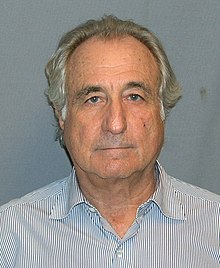
Reminds us a little of this man.
BernardMadoff.jpg
Source: Wikipedia
Some individuals and organizations knew better about Madoff all along. The high investment returns year after year could not be legitimate in the real world. That is not scientific proof, but by inference it was clear that the only way such returns were possible was in a Ponzi scheme or front running. It turned out to be a Ponzi scheme. Many organizations steered their clients away from Madoff. Other advisors said they did not know how he achieved those returns. No legitimate investment advisor could actively recommend Madoff because no legitimate investment advisor had any idea what Madoff was doing that could be legitimate.
In order to avoid dangerous situations, we do not need proof. We only need enough information to convince ourselves by inference that something is not right. To be convinced by claims of a breakthrough technology, we need substance - evidence, not happy talk and a black turtleneck, even with the confident speech with the appropriate hand gestures and head tilt.

More than anything else, this blog is about making inferences from a limited set of data on the statements and actions of individuals and groups, especially, but not exclusively in the political arena. We then observe whether the political commentators appropriately consider these arguments or whether they instead are sidetracked by the claims made by the political actors. We find the objective press custom of addressing statements or actions of one side of the aisle by asking the other side of the aisle what they think to be an inadequate response to events. We also find the objective press practice of reporting on the actions of one side of the aisle based on statements by that side (the first half of the "he said/she said" reporting process) almost at face value instead of directly reporting what those actions represent to be inadequate and therefore inaccurate reporting. The voter suppression efforts of Republicans throughout the country are an example of this.


Voter ID Laws - Framing the Issue

In their May 3, 2016 post on their blog, Joseph and Mark (last names not included in the bio on their site) criticize the failure of a NY Times article on voter ID laws to promptly address the absence of voter impersonation fraud until nearly the end of the piece, while introducing the voter ID law subject at the beginning in the usual "he said/she said - two sides to every issue" manner still considered the standard for objective reporting outside the cable news sphere of Foxnews/MSNBC.
To borrow from Mann and Ornstein, it's even worse than that.
First of all, any objective piece about voter ID laws -- "voter ID" - what could be more reasonable? -- any piece, to be objective, should refer to 'voter impersonation fraud" rather than the vague and more general terms "voter fraud" and "election fraud" which encompass other practices voter ID does not address. Election fraud history includes many examples of practices that voter ID does not address, like buying votes, counting nonexistent ballots as valid, not counting votes that ought to be counted, and, in fact, denying the right to vote to people who are entitled to vote, which is actually a practice that voter ID promotes by permitting peremptory challenges to eligible individuals who show up to vote. The main deterrent to voter impersonation fraud, in the absence of these new laws,  is that an individual who is not a qualified voter would risk being prosecuted and convicted of a felony when the only upside to that individual would be to increase the vote tally of their favored candidate(s) by one vote.

Even more to the point, voter ID laws emerged as one of a series of measures to suppress voter registration and voter turnout and the ability of qualified citizens to vote as a distinctly Republican Party practice.

In 2002, NH state Republican Party operatives hired an outside telemarketer to jam the phone lines of a get out the vote effort of the state Democratic Party and the firefighters union. (2002 New Hampshire Senate election phone jamming scandal.)
Only weeks after the 2006 midterm elections, in an unprecedented step, seven of the U.S. Attorneys, all Republicans, were fired by the Bush administration's Department of Justice. The reasons for the firings included the failure to prosecute allegations of voter election fraud that would "hamper Democratic voter registration." (2006 US Attorneys Dismissals Controversy) Although it had become customary for US Attorneys to submit their resignations at the end of a Presidential administration, this kind of firing of attorneys of the same party after the midterm elections had all of the appearances of political motivation. The Bush administration figures may have believed the firings would escape notice, but political followers began to notice immediately. The line of argument from the Bush administration supporters became - "this happens all the time - when Clinton became President all of the US Attorneys were replaced", deftly avoiding altogether the actual substance of the argument that politics was intruding dangerously into the administration of justice.

If you are a party trying to keep power in a democracy, but are concerned that demographic changes and the tide of popular opinion are turning away from you, then-
Eliminate practices that make it easier for broad swaths of the public to vote, such as early voting, absentee ballots, college student registration in university towns, and get out the vote drives.
Put in place practices that make registration and voting more difficult for those more likely to vote for Democrates - enacting voter ID laws and shutting down polling places in Democratic strongholds.


Monday, June 13, 2016

Framing to Win vs. Framing for Understanding

"Hamilton continues Broadway dominance with 11 Tonys" read today's headline in the Washington Post, along with the subheading "The blockbuster musical about the Founding Fathers fell short of the record for most Tony Awards held by "The Producers".
Image result for hamilton tonys


(Source: USAToday)
OK, so it is an awards show and therefore a competition among this year's nominees, which never feels quite right in the creative arts as opposed to athletic competition. Still, in this 2015-2016 Broadway season , best described as the blowout year of Hamilton, for the headline to say that Hamilton in any way"falls short" seems like a failure of framing. Even "second only to The Producers all-time" would have been more accurate, but still not quite faithfully represent the completely positive night and year for Hamilton.

So why does that matter? Seems like a small quibble, but it illustrates the problem of framing in the news media - the gravitation toward the horse race in the elections as well as the most tantalizing tidbit,  which can mean setting records or not, or a candidate making the most outrageous statements with not enough treatment of the issue "What is really going on here?" More to come on this framing topic in the next post.


Tuesday, May 24, 2016

Arthur Ashe - Developing a Winning Strategy


For today's sports analogy, we need to look back to Arthur Ashe's amazing performance in the 1975 Wimbledon championship, but first let's recap key takeaways from recent sports posts.
-Shirley Babashoff -how the US press, even with a tendency to favor the US team in any Olympics, got the underlying story so wrong despite the manly appearance and deep voices of the teenage East German swimmers. This points to the difficulty drawing inferences from the data when the most important data is hidden from view.

Making accusations of cheating seems to require a higher bar than calling a player a poor sport. Based on the evidence, Shirley appeared to be a bad sport - she did not have incontrovertible proof that the East Germans had been dieting on performance-enhancing cocktails - her inferences were based only on appearances, however compelling. Besides, the explanation that the East Germans had worked harder was in keeping with the 1970s trends and tone of some Olympic coverage.  That is , the East Germans women's program had been raised to the level of a men's program - tougher workouts, intensive weight training. In keeping with the popularity of behaviorism at the time, perhaps women only needed to work as hard as men to equal men in performance. Except that is not what was happening and the American female competitors suffered for it - not physically as the drugged up East Germans later suffered , but by the lack of recognition for their amazing athletic accomplishments.
Golden State/NE Patriots/Denver Broncos -how a team can improve its competitive chances by changing the style of game that they are playing, forcing their opponent to find a way to respond. Build a different type of offense while opponents are building their defense to play well against all teams, not just your team, or build a different type of much stronger defense, even at the expense of your offense.

The Arthur Ashe/Jimmy Connors match-up in the 1975 Wimbledon final is well known. Ashe, turning 32, was a star of the past who had never won Wimbledon, but made it to the final. Connors, the 22 year old brash upstart had reached the final with his power game and was heavily favored to win.  On the day of the final, Ashe got Connors a little off his game by wearing his US Davis Cup team jacket, a team that Connors had snubbed. Ashe played a completely different style in the final, slicing serves, mixing drop shots, lobs and carefully placed shots to the backhand to limit Connors' ability to maximize his power advantage. Even though Ashe was not playing his strongest style of game, he was able to change the dynamic of play enough to put Connors in a weakened position without enough time to keep his wits about him and adjust his own game. Connors relative inexperience surely played a part in the outcome.

For the current presidential election, the popular press keeps reminding us:
-The general election is not like the primaries. When the primaries are over, each of the winning candidates need to pivot to the general by changing their campaign tactics to move to the center of the political spectrum while holding on to the base in their own party

But as some pundits have pointed out, the formula for success in the Republican primaries has changed in recent decades to be more and more a matter of policy-free debate with the vacuum filled in with personal attack against opponents. Jeb Bush chided Donald Trump that "you can't bully your way to the presidency" which was a statement that sounded false as soon as he uttered it.

Can Trump bully his way to the presidency? Maybe.
If not, does he have to change his style? To what?
Can Hillary Clinton win the general election on the issues? Is there a way to defend herself against Trump's attacks? Does she need to attack very hard right now? In what way? What kinds of attacks would stick?

Preliminary signs suggest that Trump's bullying method with an ever so slight softening will continue in the months ahead and could even be successful, especially if Bernie supporters are bitter and new voter ID rules along with poll closures and limits on absentee ballots are a factor. Perhaps all he needs to do is keep Clinton on the defensive. He will have plenty of help from Republicans who want to get on board.

Clinton's current approach is not promising. There are no apparent knock out punches in the offing. The recent pivot to indicate that Bill will have a policy role on the economy is a bad move tactically - at just the time that Clinton needs to exhibit strength, Trump is saying what a bad guy Bill Clinton is. By drawing on her relationship with Bill, Hillary is offering up the possibility that she can't do it alone, being president, and needs her husband's help. At the same time this is a statement that maybe it is valid and somehow relevant for Trump to criticize Bill as a campaign tactic.

Wednesday, May 18, 2016

Shirley Babashoff and More Luck + More Skill

The current news of the Russian doping scandal at the Sochi Winter Olympics made me think back to Shirley Babashoff at the 1976 Olympics. Young Shirley had been swimming up a storm in pre-Olympic events breaking world records and generally exuding a youthful exuberance and spontaneity. She was a great catch for reporters looking for quotes. The East German swimmers excelled in the pre-Olympic events as well, setting up a showdown at the Olympics.
Shirley did not win any individual gold medals, winning just the one gold medal in the relay. She only lost to East Germans who set world records.
Only years later was the massive use of hormones steroids by the East German team confirmed.
All of the reasons for suspicion were there.
The East Germans had improved dramatically from 1972 to 1976, actually from 1972 to 1973.

-East Germany, with a much smaller population than West Germany, won every swimming gold medal, but for the one relay
-Teenage girls with deep voices who looked more like men
-Races were being won by large margins
-Marked improvement since the prior Olympics
-Nearly uniform body types, unlike the variety on other teams

Yet when Shirley complained about overhearing voices in the locker room that sounded like men, looking up, and realizing these were the East German women, she was  branded a poor sport in the press.
All of the ingredients for a dramatic pro-American story based on the truth were there, yet the press mostly got it wrong. We have all heard of the "big lie", that is, a lie that is so outrageous that belief is prompted by the presumed improbability of anyone telling such a big lie and expecting to get away with it. Here we had the " big truth", that is, a fact that is so outrageous that special caution is considered necessary before granting it credibility. Even that summer, some news articles presented an evenhanded treatment, quoting the likes of Willye White who weight trained for five years straight and stated flatly that women never look like the East Germans unless they are using chemicals. Rod Strachan, the swimmer, was blunt, saying "If you look at the East Germans, they don't look exactly like girls. They're quite a bit bigger than most of the men on the American team. They could go out for football at U.S.C."

The press was not prepared for the newness of the story of widespread use of performance enhancing substances in 1976. It did not fit their existing model for the Olympics. Any challenge to the model needed to be proved beyond a reasonable doubt to be believed.

Many in the press failed again in 1998 at the height of the Monica Lewinsky scandal. Throughout the summer, there were many Presidential approval polls that fluctuated slightly. The fluctuations may have been random noise, but the more Kenneth Starr appeared to be persecuting President Clinton the higher his approval rating rose toward 70% approval. Yet many in the press (Cokie Roberts, for one) viewed a precipitous drop in the approval ratings as only a matter of time.  Like Nixon, a president can only withstand so much scandal before he needs to resign for the good of the country and public approval will drop in lockstep.

Ironically, the history of the Trump approval ratings throughout 2015 and into 2016 with a press in denial are the mirror image of the Clinton approval ratings experience in 1998. For Nate Silver, the working model for Trump was that this was just like Giuliani or Gingrich in 20xx with high approval ratings prior to actual primary voting. Anything can happen before the primaries, so ignore all of those polls. The press went along with this because just like the 1976 Olympics or the 1998 Monica Lewinsky scandal, if something new is happening the press can not see it.
 
What is new about Donald Trump?
For one thing, some of Trump's supposed missteps, comments that were supposed to get him into big trouble with the Republican primary voters, were flatly true statements. As Jeb Bush repeatedly said that his brother "kept us safe", Trump said no he did not, which was a plain fact. Sure he could make excuses and say why he could not keep us safe and prevent the 9/11 attacks, but in political terms, it works better if you preempt all of that defensive discussion and just claim "he kept us safe". Trump's challenge to that becomes refreshing. Then there was the statement about McCain and prefering people who do not get shot down. Sure that is deeply offensive, but in a roundabout way, that is a challenge to the "our heroes/your traitors" mentality of the Republican campaign tactics where John Kerry could be portrayed as a liar about his heroic service in Vietnam while George Bush got a free pass for all his free passes home while in the National Guard.

The problem is a press that plays a role reporting the facts, the who, what, when, where, and why with limited ability to interpret new phenomena. Interpretation is left to opinion writers whose expertise is taking facts and forcing them through their worldview. Those opinions are thrashed about by commenters and other opinion writers, then it is on to the next story. New patterns in the data, changes in existing models used to explain political and social phenomena, can be easily missed.

In the case of Donald Trump, reporters who do not correctly interpret and understand his appeal to voters will be scratching their heads in November if he wins.  Ironically, those same pundits who misunderstood his appeal from the beginning will likely look back and come up with the wrong explanations for his victory.

Trump may lose if the Clinton campaign figures out why he has been successful,  how to beat him at this game, and executes on an effective strategy unlike any seen from Democrats in presidential politics. Scott Adams, of Dilbert fame, blogs about Trump's success and the reasons for it, including his persuasive skills and appeals to the irrational in voters. While his arguments are well outside the mainstream, it is refreshing to hear other than the usual arguments being considered.

So here we are.

1. Shirley Babashoff was cheated out of four gold medals in 1976, receiving the silver. Then she was cheated again when portrayed as a spoilsport in the press. Her book Making Waves: My Journey to Winning Olympic Gold and Defeating the East German Doping Program will be released July. Those East Germans still have those gold medals. Last I checked, she had never heard back from those reporters who got the story wrong - maybe because they could not bear that while she was doing her job so well she was also doing their job better than they were. Of course, it wasn't only Shirley Babashoff, but all of the other swimmers who were cheated.

2. The Clinton approval ratings sustained at such high levels in 1998 were explained by pundits as the American people being so happy about the economy. It couldn't be that a large majority thought that impeaching the president in these circumstances was unfair and maybe even damaging to democratic institutions.

3. Donald Trump's success and what does it mean for November?

It's (a) the process and (b) the man.

(a) Process: The increasingly substance-free primary process on the Republican side cleared the path for Mr. Trump.
(b) the man:
Let's start with George Lakoff and add only a sprinkle of Scott Adams. From Scott Adams we accept that people can be irrational in many ways and yes, Trump has skills at persuasion associated with his blanket statements, voice and demeanor.
From George Lakoff:
March 16, 2016 post

Some of Lakoff's observations have been out there in the press, but not always systematically as a cohesive model. Lakoff's model is basic, but there is more to the story which next week's post will explore.